


What is the history of marbles and marble making?
Nov 21, 2016
What is the history of marbles and marble making?
Marbles, round spherical objects apparently used to play games, have been in existence for at least the past 3,000 years. They have been found in Egyptian pyramids and in North American indian mounds. An annual marble tournament has been played in Tinsley Green, England on Good Friday for at least the past 300 years. And the United States National Marbles Tournament is still held the third weekend of June in Wildwood, New Jersey.
The first marbles were round stones, nuts or fired pieces of clay and pottery. The Pretty Little Pocket Book, a Newberry book, reprinted by Isaiah Thomas in 1787, contains a verse on playing marbles. William Blake, in his book of prose, Songs of Innocence (1798), painted an illustration of three boys playing marbles for his poem "The Schoolboy". An original copy of this can still be viewed at the British Center for Art at Yale University. This is one of the earliest known illustrations of glass marbles.
Glass marbles appear to have been introduced about 1860. Almost all antique handmade glass marbles were produced in Germany from the period 1860 to 1920. For a number of years, collectors believed that some handmade marbles, predominately swirl-type and end of day type, were produced in England. There has been no evidence uncovered to substantiate this belief. The belief arose because in the 1970s brightly colored swirls and end of days were purchased at various antique fairs and auctions in England. Subsequent investigation has shown that these were imported in the early 1900s from Germany. A very imited number of handmade marbles were also produced in the United States in the 1890-1915 time frame. These
We do know that stone marbles were produced in Germany in at least the early 1800's. It appears that pottery marbles were produced in Germany and in England, during this time period. In The Boys' Own Book, published by Charles S. Francis, New York, 1829, the rating of different kinds of marbles was listed. The cheapest were the Dutch marbles of glazed clay, the next cheapest were those of yellow stone with spots of black or brown, and the best were pink stone with red veins. There is no mention of marbles was an American phenomenum. In an initial effort to compete with German imports, American manufacturers produced handmade marbles of inferior quality and duller colors. This allowed the Americans to compete based on price. But, their marbles were probably not well received by marble players, judging from the fact that mail order catalogues of the time feature German handmade marbles.
In 1905, Martin F. Christensen of Akron Ohio hit upon the idea to use a machine to produce "perfectly round spheres". This provided the Americans with the ability to compete with the Germans on two fronts. First, their marbles were superior for shooting. Because they were made by machine, and not by hand, they had no pontils. This greatly aided a marble shooter because he did not have to be concerned with the irregularities of a slightly out of round handmade marble with rough ends when trying to shoot a straight line. Second, the use of machinery allowed the Americans to greatly reduce their unit cost of production. Thus prices could be lowered and American marbles could compete with the Germans.
By the mid-1920's, the Germans were effectively out of the marble-making business. Almost all marbles were made by machine in the United States. The following two decades saw what is described as "The Golden Age of Machine Mades". The large marble makers of the time began to compete with each other to produce more unique designs and more colorful marbles each season. This period of time saw the introduction of Akro Agate corkscrews and Popeyes, Peltier National Line Rainbos, swirls and Peerless Patches, and the rise and fall of The Christensen Agate Company. By the Great Depression, Akro Agate Company and Peltier Glass Company had become the largest producers of marbles. With the advent of the Great Depression, marble manufacturers became more cost conscious and brightly colored marbles began to disappear from the scene.
By World War II, Master Marble Company and Vitro Agate Company had entered the marble market. Akro Agate Company failed in 1951 and Vitro Agate Company and Marble King became the largest U.S. manufacturers, but faced stiff competition from Japanese imports of catseyes. By the 1960's, virtually all marbles were made in the Far East. During the 1970's, marble playing saw a steady decline, as video games became more popular and readily available. Also, marble making shifted to Mexico, with Vacor de Mexico becoming the largest marble manufacturer.
The 1970's and 1980's also saw the beginnings of a resurgence in hand made marble making by a few American craftmen.
Recently, marble playing has begun to exhibit a comeback, with sales of marbles in toy stores increasing by 40% over the past few years. Also, we have begun to enter a renaissance of hand made contemporary marbles, handcrafted by modern glassmakers.
You Might Also Like
-

Luxury Translucent Yellow ONYX for Kitchen Vanity and Wor...
-
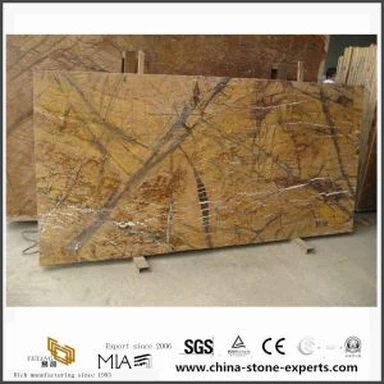
India Rainforest Brown Marble Slab Choices from Stone Exp...
-

Best Place to Buy White Color Quartz Kitchen Countertop f...
-

Han White Marble for Black and White Kitchen Floor Tile D...
-

Grey Wooden Grainy Marble Stone for Bathroom Countertop
-

Wholesale Bulk ONYX Mosaic Stone for Floor Tiles with Dis...